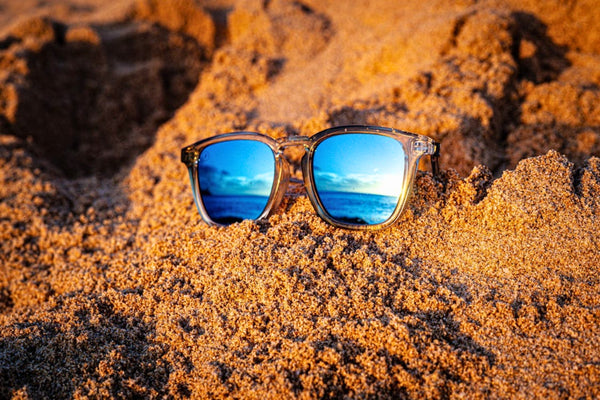
The different colours and types of tinted lenses explained

Tinted lenses are more than a style choice. The colour and depth of a tint can change how your eyes experience light, helping to improve comfort, clarity and visual ease throughout the day.

Whether you are sensitive to bright light, spend long periods reading or working on screens, or simply want a more relaxed visual experience, understanding the different types of tinted lenses can help you find what feels right for you.


What are tinted lenses?

Tinted lenses have a colour applied to them to reduce brightness and soften how light enters the eye.

Unlike lenses that target a specific type of light, such as blue light lenses, tinted lenses work more broadly to create a more balanced and comfortable visual environment.

They are often recommended for people who experience:

By reducing glare and improving contrast, tinted lenses can make everyday environments feel easier to manage.


Why does lens colour matter?

Different tint colours affect how you see contrast, brightness and detail. Some colours maintain a natural view, while others enhance contrast or soften harsh light.

The right tint depends on how your eyes respond to light and how you use your vision each day. What feels comfortable for one person may feel very different for another, which is why a personalised approach is often the most effective.

If you have some symptoms such as headaches or sensitivity to light, it may also be helpful to explore how tinted lenses can support migraines.


Types of tinted lenses by colour

Grey tinted lenses

Grey is one of the most natural and widely used tints. It reduces overall brightness without significantly changing colours, making it a comfortable option for everyday wear.

Grey lenses are often chosen for outdoor use, particularly when combined with UV400 sunglasses for reliable sun protection.

Brown and amber tinted lenses

Brown and amber tints enhance contrast and depth perception, which can make objects appear sharper and more defined.

They are particularly useful for activities such as driving or spending time outdoors, where improved contrast can support clearer vision.

These tints can be paired with polarised lenses to reduce glare while driving.

Green tinted lenses

Green tints offer a balance between reducing brightness and maintaining natural colour perception.

They improve contrast while keeping colours relatively true to life, making them a versatile option for general use across different lighting conditions.

Yellow and orange tinted lenses

Yellow and orange tints are often used to enhance contrast in lower light or overcast conditions.

They can make environments appear brighter and clearer, and may help reduce visual stress by softening high-contrast patterns.

If you experience difficulty focusing when reading, these tints may be explored alongside a colourimetry visual stress assessment. Book an eye test first to see if the assessment is recommended by your optometrist.

Rose and pink tinted lenses

Rose or pink tints are often chosen for their ability to soften contrast and reduce visual strain.

They are commonly used by people who experience discomfort when reading or using screens, these tints can help create a more relaxed visual experience.

These tones are also often associated with tinted lenses for migraines or sometimes used as part of a personalised approach to managing visual stress.

Blue tinted lenses

Blue tinted lenses are often chosen for their appearance, offering a more distinctive, modern look.

While they can slightly reduce brightness, they are typically more style-led. It is important not to confuse them with blue light lenses for screen use.

Compare blue light vs tinted lenses to understand which option suits your needs.


How tint is applied across the lens

Tinted lenses are not only defined by colour, but also by how that colour is applied and how strong the tint is. Both the style and depth of the tint can influence how your eyes experience light and how comfortable your vision feels throughout the day.

Tints can be customised from very light and subtle through to darker, more protective shades, depending on your sensitivity to light and how you use your vision.

  • Full tint lenses provide consistent brightness reduction across the entire lens, with the depth tailored to your comfort
  • Gradient tints are darker at the top and lighter below, helping reduce overhead brightness while keeping your lower field of vision slightly brighter
  • Fashion tints offer a softer, more subtle effect for everyday wear, often with lighter tint levels

Choosing the right tint depth is just as important as choosing the colour. A lighter tint may be more suitable for indoor use or screen work, while a darker tint can offer greater comfort in bright outdoor conditions.

If you are choosing lenses for different environments, it may also help to understand how photochromic lenses adapt to changing light conditions.


Choosing the right tinted lenses for your lifestyle

The best tinted lenses are the ones that fit naturally into your day.

  • For everyday wear, grey, green and light brown tints offer a natural balance.
  • For driving, brown and amber tints can improve contrast.
  • For reading or visual stress, softer tones such as rose or yellow may feel more comfortable.
  • For outdoor use, combining a tint with UV400 protection offers both comfort and protection .

If your symptoms vary across different environments, it may also be helpful to compare tinted vs polarised vs photochromic lenses to find the right balance.


Conclusion

For many people, tinted lenses can make a noticeable difference to how their eyes feel. They can help reduce glare, soften brightness and improve contrast, making it easier to focus and feel comfortable in different environments.

Because every person responds differently to light, finding the right tint is a personal process. What works well for one person may feel completely different for another, which is why tailored advice is so important.

The best place to start is with a comprehensive eye examination. This allows us to understand your vision fully and guide you towards the most appropriate solution, whether that involves tinted lenses, lifestyle adjustments or further assessment.

Book your eye test

Book your style consultation

FAQs

Grey, green and brown tints are often the most comfortable for everyday wear, as they provide a natural balance of brightness and clarity.

Yes, tinted lenses can reduce brightness and glare, helping your eyes feel more comfortable in bright environments.

Certain tints, particularly softer tones such as rose or yellow, may help reduce visual stress and make reading more comfortable. 

Yes, a full eye examination helps ensure your lenses are tailored to your vision and that any underlying issues are identified.

You may also like

Migraine glasses: can tinted lenses help with headaches?
If you experience migraines or frequent headaches, you may have noticed that light can make symptoms feel worse. Bright environments, glare or certain patterns can trigger discomfort and make it harder to focus. Many people searching for migraine glasses in the UK are looking for ways to reduce these visual triggers. While glasses cannot treat migraines themselves, certain lenses, including carefully selected tinted lenses, can help improve visual comfort and reduce the impact of light. If you are exploring your options, it can also help to understand how tinted lenses for everyday comfort and clarity and everyday use.   Why light can trigger migraines and headaches For many people, migraines are closely linked to how the brain processes light. Bright or flickering light, glare from screens, or high-contrast environments can place extra strain on the visual system. This can lead to: Increased light sensitivity (photophobia) Eye strain and visual discomfort Difficulty focusing Headaches triggered or worsened by bright environments Some people may also experience visual stress, where patterns or contrast make text or surroundings feel uncomfortable or unstable.   What are migraine glasses? The term migraine glasses is often used to describe glasses designed to reduce light sensitivity and visual discomfort. In many cases, these involve tinted lenses that help soften brightness and reduce the intensity of certain light wavelengths. One commonly referenced option is FL-41 tinted lenses, which use a rose-based tint designed to filter specific parts of the light spectrum. Some people find this type of tint more comfortable, particularly in environments with artificial lighting or screen use. However, there is no single tint that works for everyone, and results can vary.   Do FL-41 lenses work for migraines? FL-41 lenses are often discussed in relation to migraines, and some people report improved comfort when using them. They are designed to reduce certain wavelengths of light that may be linked to visual discomfort. However, it is important to understand that: They do not prevent or treat migraines Their effectiveness varies between individuals They are one of several tinted options, not the only solution For many people, a personalised approach to tinted lenses can be more effective than choosing a single standard tint.   How tinted lenses can help Tinted lenses work by reducing overall brightness and improving how your eyes respond to light and contrast. For some people, this can help: Reduce visual discomfort in bright environments Soften glare from screens and artificial lighting Make reading or focusing feel easier Create a more relaxed visual experience If your symptoms are linked to light sensitivity or visual stress, you may also benefit from understanding the different types of tinted lenses and colours available, as some tones feel more comfortable than others.   Tinted lenses vs blue light glasses You may also come across blue light glasses when searching for migraine solutions. Blue light lenses are designed to filter a portion of light from digital screens and may help reduce glare for some people. However, there is currently limited evidence to show that they reduce migraines or prevent headaches. These lenses can enhance warmer tones, meaning a white background may appear slightly softer or more sepia in tone, similar to the setting often used on e-readers. Tinted lenses tend to offer a broader approach by reducing overall brightness and improving contrast, which may feel more beneficial if your symptoms are linked to light sensitivity rather than screen use alone. Compare blue light lenses vs tinted lenses to understand which is right for your needs.   Finding the right tint for you There is no one-size-fits-all solution when it comes to migraine glasses. The way your eyes respond to light is highly individual. Some people find relief with softer tones such as rose or grey, while others benefit from more specific colours tailored to their visual response. If visual stress is a contributing factor, a personalised assessment such as a colourimetry visual stress test can help identify which tint feels most comfortable for you.   Start with a full eye examination Before choosing tinted lenses or migraine glasses, it is important to understand what is causing your symptoms. A comprehensive eye examination allows us to assess your vision, check for underlying eye conditions, and understand how your eyes respond to light. From there, our qualified dispensing opticians can guide you towards the most appropriate options for your needs.   Takeaway Migraines and headaches can affect everyone differently, and the way your eyes respond to light is highly individual. While glasses cannot treat migraines, the right lenses can help reduce visual triggers such as brightness and glare, making everyday environments feel more comfortable. Tinted lenses, including options similar to FL-41, may help some people by softening light and improving visual comfort, particularly where light sensitivity or visual stress is a factor. However, there is no single solution that works for everyone, which is why a personalised approach is so important. At Leightons, we take the time to understand your symptoms, your lifestyle and how your eyes respond to light. Starting with a comprehensive eye examination by one of our optometrists, our qualified dispensing opticians can advise on the correct lens solution or you, whether that involves tailored tinted lenses or further assessment such as colourimetry. Book an appointment Find your nearest branch
Navigation Previous
Navigation Next