Sign in
 Basket



How do hearing amplifiers work?
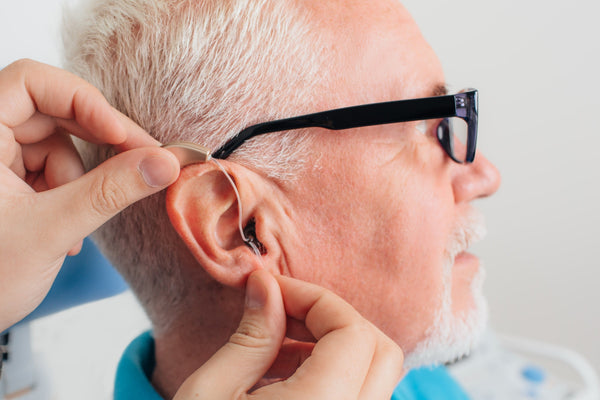
Hearing amplification devices increase the volume and might make it easier for you to hear sounds louder. Yet they not a prescribed product and do not match your individual needs. Hearing loss is extremely common – millions of people in the UK live with a hearing loss, so you’re not alone.
At Leightons Opticians & Hearing Care, our expert audiologists will help you identify the best device for you, in most cases this is a Hearing Aid.
What is a hearing amplifier?
Much like a tiny PA system, hearing amplification devices use microphones to capture and amplify all sounds around you, before delivering it to your ear at an adequate and audible volume level.
What kind of devices are available?
There are plenty of hearing amplifiers designed to help you while on the telephone, watching TV, and for in-person conversations. However, these devices amplify all sounds equally and aren’t designed to support hearing loss.
For an all‑round solution that adapts to your personal hearing needs, a hearing aid is often the most effective option. Our expert audiologists can assess your hearing and guide you towards the most suitable hearing aid for your lifestyle and needs.
What’s the difference between a hearing aid and a hearing amplifier?
All hearing aids use amplification, however, hearing aids are regulated medical devices carefully programmed and tailored to fit the hearing loss of a particular individual. This makes them more suitable for moderate to severe hearing loss.
Hearing amplifiers are not medical devices and are not designed to diagnose, treat or manage hearing loss. They don’t adapt to your individual needs, meaning they offer volume without improving clarity or understanding.
What are induction loops?
An induction loop is an older technology system designed to help hearing aid users to hear more clearly in some specific environments. You’ll often find them in places like meeting rooms, theatres, banks, and cinemas.
Here’s how it works:
A thin cable is installed around a room or designated listening area
The system creates a magnetic field that carries speech or important sound
When you switch your hearing aid or ALDs to the T (telecoil) setting, you can hear the sound closer to you and more clear with less background noise
Induction loops can make a huge difference to day‑to‑day listening comfort. Our audiologists can help you understand how loops - and other assistive listening devices - can work with Hearing Aids.
What is Auracast?
Auracast is a new Bluetooth audio technology designed to make listening more inclusive. It allows one device to broadcast high-quality sound to multiple compatible hearing aids, earbuds, or headphones at the same time, without the need for pairing.
Developed with the hearing aid industry for assistive listening, Auracast could mean easier access to shared audio in public spaces such as train stations and lecture theatres. For people with hearing loss, it’s a positive step towards clearer sound and greater confidence in everyday situations.
Leightons FREE hearing test
Leightons Opticians & Hearing Care offers a FREE hearing test in all branches. We provide a comprehensive hearing check carried out by our experts – professionally trained hearing aid audiologists registered with the HCPC (Health & Care Professions Council), with some even members of the British Society of Hearing Aid Audiologists.
Book your FREE hearing test now
You can book an appointment online or you can call us on 0800 40 20 20 to arrange a FREE hearing test at your nearest Leightons branch.
Alternatively, you can take the test at home. This involves the same experienced, professional audiologist you would see in branch coming to your home to carry out your hearing test with specialist portable equipment.
Learn more