Wearing hearing aids for the first time

Wearing digital hearing aids, for the first time should be an enjoyable experience, although they may take a little getting used to.


Firstly, make sure your digital hearing aids are professionally fitted

At the hearing aid fitting, expectation levels and motivation should be established in relation to individual circumstances including nature and degree of hearing loss, lifestyle demands and the style and digital hearing aid model.

If you have never worn a hearing aid before, the idea of wearing one, can be daunting and knowing what to expect is difficult. So at Leightons you will be reassured to know that our fully qualified hearing aid audiologists provide a full explanation of how digital hearing aids might sound, feel and improve your life.

During our hearing consultation and prior to our free hearing aid demonstration we will help to examine situations where you are struggling to hear and what your expectations are from wearing hearing aids. We will also discuss situations and individual sounds that you specifically want to hear more clearly.


Understanding your individual hearing difficulties, experiences and expectations will allow us to demonstrate the most appropriate digital hearing aids for you.

We will also discuss expectations of wearing a digital hearing aid and help explain how sounds that you have gradually lost over time are recovered and how to adjust to hearing these sounds again.

If you are concerned about your hearing and wish to learn more about wearing a digital hearing aid, please contact us for a free hearing assessment or a free hearing aid demonstration, you can now book your appointment online.

Wearing digital hearing aids - the first week

The easiest listening situation should be in your own home, so we suggest that you first start wearing your digital hearing aids at home. With your new digital hearing aids you will notice that sounds like running water, footsteps on carpet and even the rustle of newspapers will be louder. When you first wear your digital hearing aids you should expect to be enlightened by the sounds you hear but aware that some sounds might be loud to start with. This is quite normal and will recede as you get more used to wearing your new digital hearing aids.

Having conversations for the first time with your new digital hearing aids will allow your brain to start processing and understanding speech sounds. Your new digital hearing aids, will sometimes initially make your own voice sound louder but you will soon get used to hearing your voice as it should be. You do need to work at listening as well so a good tip is to wear your digital hearing aids and practice listening to voices and sounds that are important or familiar to you. Sometimes it will be amazing how new digital hearing aids allow you to follow a conversation that is taking place in the living room while you are in another room in the house.

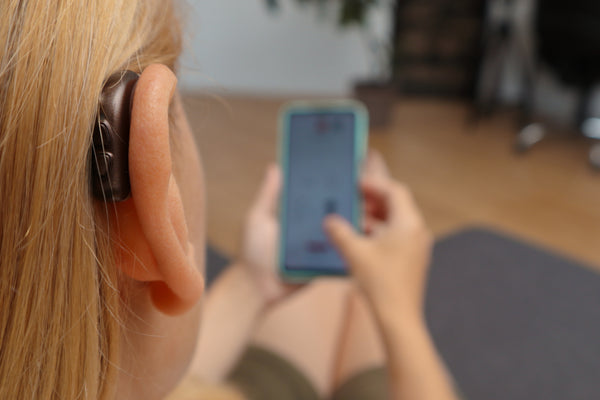
Listening to the television with your new digital hearing aids, is also a good way to acclimatise to your new hearing. If you are using Bluetooth devices which stream the sound directly into your hearing aids, then you will most likely be enjoying the clarity of sound with immediate effect.

It's important to remember that the hearing loss of one person differs from that of another, and the fine tuning of the digital hearing aids may be crucial. Leightons hearing aid audiologists, offer a full and bespoke aftercare programme in order that your hearing aids amplify the right frequencies (high and low pitch) so as to provide the correct level of amplification in a frequency range where you may be particularly sensitive to sound - so that the digital hearing aids have a positive effect all the time.

Digital hearing aids and the telephone

There are many different tips to help you use your new hearing aids to hear more on the telephone. All of today's leading digital hearing aids have special programs to help you hear better on the telephone. Oticon hearing aids use Bluetooth to transmit the sound into a phone adaptor which then directly streams the voice from the telephone into your hearing aids. When wearing digital hearing aids for the first time, test them out on the phone by calling someone you know and test how much better you can hear whilst listening with your new digital hearing aids.

Wearing your digital hearing aids in noisy situations

After wearing your hearing aids at home and feeling comfortable with them, it's time to listen to the benefits in noisier situations, such as a busy restaurant. The digital hearing aids are designed to amplify speech, whilst managing the unwanted sounds around you. Many of today's digital hearing aids offer artificial intelligence in the form of a deep neural network that will analyse the sounds around you, and help to focus on what's important.

Digital hearing aids and the feeling in the ear

Even though the latest digital hearing aids are designed to be light and easy to wear, it may take a bit of time getting used to having something in the ear. It's most important that the digital hearing aids fit properly, and Leightons experienced hearing aid audiologists offer a full one hour bespoke fitting service in order to make sure the fit and feel is perfect. The hearing aid fitting is vital to creating a comfortable fit and to provide the correct amplification. An incorrectly fitted earmould of a behind-the-ear hearing aid or the shell of an in-the-ear hearing aid that does not fit tightly in the ear canal, will result in the hearing aids will not work optimally or they will whistle (feedback).

Leightons' experienced hearing aid audiologists are always on hand to provide advice on your hearing and your digital hearing aids, and can tune or even refit the hearing aids for better comfort or hearing clarity. Digital hearing aids will offer excellent benefit but it's true that practice makes perfect and this means wearing your digital hearing aids in all environments and providing feedback to Leightons hearing aid audiologists will help to enable you to hear as well as possible.

Contact Leightons for a free hearing test and full assessment if you have any concerns about the performance of your digital hearing aids.

You may also like

Group of adults socializing and enjoying drinks together at an outdoor evening gathering with string lights and food on the table.
How do hearing amplifiers work?
Hearing amplification devices increase the volume and might make it easier for you to hear sounds louder. Yet they not a prescribed product and do not match your individual needs. Hearing loss is extremely common – millions of people in the UK live with a hearing loss, so you’re not alone. At Leightons Opticians & Hearing Care, our expert audiologists will help you identify the best device for you, in most cases this is a Hearing Aid. What is a hearing amplifier? Much like a tiny PA system, hearing amplification devices use microphones to capture and amplify all sounds around you, before delivering it to your ear at an adequate and audible volume level. What kind of devices are available? There are plenty of hearing amplifiers designed to help you while on the telephone, watching TV, and for in-person conversations. However, these devices amplify all sounds equally and aren’t designed to support hearing loss. For an all‑round solution that adapts to your personal hearing needs, a hearing aid is often the most effective option. Our expert audiologists can assess your hearing and guide you towards the most suitable hearing aid for your lifestyle and needs. What’s the difference between a hearing aid and a hearing amplifier? All hearing aids use amplification, however, hearing aids are regulated medical devices carefully programmed and tailored to fit the hearing loss of a particular individual. This makes them more suitable for moderate to severe hearing loss. Hearing amplifiers are not medical devices and are not designed to diagnose, treat or manage hearing loss. They don’t adapt to your individual needs, meaning they offer volume without improving clarity or understanding. What are induction loops? An induction loop is an older technology system designed to help hearing aid users to hear more clearly in some specific environments. You’ll often find them in places like meeting rooms, theatres, banks, and cinemas.  Here’s how it works:  A thin cable is installed around a room or designated listening area  The system creates a magnetic field that carries speech or important sound  When you switch your hearing aid or ALDs to the T (telecoil) setting, you can hear the sound closer to you and more clear with less background noise  Induction loops can make a huge difference to day‑to‑day listening comfort. Our audiologists can help you understand how loops - and other assistive listening devices - can work with Hearing Aids.  What is Auracast? Auracast is a new Bluetooth audio technology designed to make listening more inclusive. It allows one device to broadcast high-quality sound to multiple compatible hearing aids, earbuds, or headphones at the same time, without the need for pairing. Developed with the hearing aid industry for assistive listening, Auracast could mean easier access to shared audio in public spaces such as train stations and lecture theatres. For people with hearing loss, it’s a positive step towards clearer sound and greater confidence in everyday situations. Leightons free hearing test Leightons Opticians & Hearing Care offers a free hearing test in all branches. We provide a comprehensive hearing check carried out by our experts – professionally trained hearing aid audiologists registered with the HCPC (Health & Care Professions Council), with some even members of the British Society of Hearing Aid Audiologists. Book your free hearing test now You can book an appointment online or you can call us on 0800 40 20 20 to arrange a free hearing test at your nearest Leightons branch. Alternatively, you can take the test at home. This involves the same experienced, professional audiologist you would see in branch coming to your home to carry out your hearing test with specialist portable equipment.
Navigation Previous
Navigation Next