Staying connected virtually when you have a hearing loss

It's much easier to stay connected with family, friends or colleagues on the video calling apps we have available now. However, if you add hearing loss into the mix, you’ll know all too well the difficulties you’re faced with when it comes to your weekly video calls with loved ones or virtual meetings at work.

At Leightons’ we wanted to offer advice when it comes to staying connected over video calls. Here are our 6 tips for staying connected, on video chat:

Check your Wi-Fi connection before connecting

There’s nothing worse than sitting down ready to take part in the family quiz, to then realise your connection is bad! Stuttering sound and a jumpy picture – both of which can make it extremely difficult to take part in the conversion and hear well.

Next time, before you get comfy, make sure you choose a spot nearer to your Wi-Fi router or extension, this way you’re less likely to experience a poor connection interfering with your calls.

Optimise your surroundings

Just as you would in person, try and limit the noise and distractions around you when you need to tune in. The same goes for when you’re about to join a video call. Turn all other devices off, ask those you live with to keep it down and shut the window if you’re on a busy road. Eliminating as much background noise as you can will help you to focus on sounds you want to.

We recommend asking those dialling in on other video calls to do the same, to reduce the overall background noise for everyone involved and help you concentrate.

Start a conversation before your call

For those without a hearing loss, it can be difficult to understand what people with hearing loss really experience.

The best way to make sure you’re on the same page, is to communicate clearly before your call. This could be a quick call, email or text, explaining what your friends, family or colleagues can do to help you. As starting point, suggest these:

  • Ask them to sit in a well-lit room, this way you have good sound and picture, meaning you can listen, and lip read at the same time.
  • Suggest they stay on mute as much as they can, only unmuting themselves when they’re due to speak to reduce background noise.
  • Let one person talk at time, don’t talk over anyone.
  • Don’t shout, this can make it worse. Talk at a normal level, clearly and allow for a time delay that often occurs over video calls.

Connect your hearing aids to your device

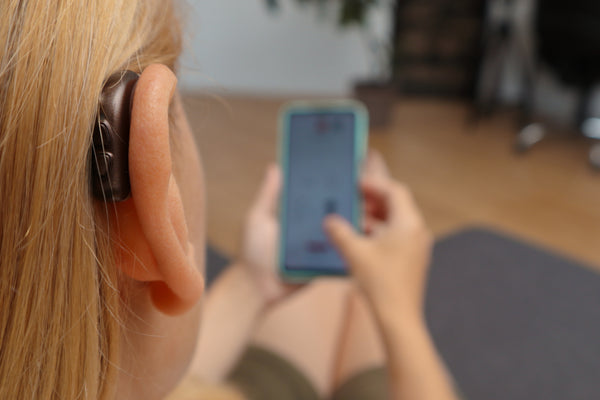
Most hearing aids now have Bluetooth connectivity, meaning you can connect your hearing aids directly to your smartphone, laptop, or tablet. This allows the sound from the video call to go directly to your hearing aids, offering a clearer sound with better clarity. Hearing aids don’t interfere with any other video calling app, they can send the sound straight to your ears, just like headphones!

Dino Mustjabasic, a qualified Audiologist & Hearing Consultant from our Sutton practice, offers his insight on wireless connectivity with your hearing aids, in order to make video calls an enjoyable experience for those with hearing loss.

Dino smiling in suit

“If you are struggling to hear friends, family, and work colleagues online throughout lockdown, there are things you can do to help. Hearing aids can now connect to devices such as smartphones, which wirelessly stream sound directly to your ears. There are now a number of apps available that let you adjust the hearing aids wirelessly – whether at home or out and about. Hearing aids are programmed to your hearing loss, significantly improving the clarity of what you hear. There are even accessories that can be used with hearing aids, again improving the hearing in a particular situation.”

Keep your tech up to date

All digital devices have regular updates, including your hearing aids. To avoid any obstacles just before or during a video call, make sure all your software is up to date. This will allow for bug fixes, new features and ease of use – one less complication to think about.

If you’ve got any queries about your hearing aids, our audiologists are here to help. You can book a hearing appointment online at your nearest Leightons practice.

Make your video call more accessible

Depending on which video call programme you’re using, there are many tips and tricks to improve the hearing accessibility. Closed captions are a great option for those with hearing loss. While they aren’t always 100% accurate, they act as subtitles for video calls and may pick up on those few words you miss, helping to keep the conversation going without any interruptions.

Spotlighting or pinning the person speaking can also help. This is offered on most video call apps, allowing you to ‘pin’ the person talking to your screen, so they appear bigger and therefore easier to understand.

Overlaying is another great feature available on things such as Zoom, especially for work calls when someone is presenting. It allows the presenter to overlay their screen, meaning you can still see them while also being able to view a presentation.

We’re here to help

You don’t have to go it alone, if you experience difficulty with video calls, the Leightons hearing care team are on hand to help.

As a primary care provider we are open during lockdown with the safety of our patients and practice teams as our top priority and you can still book appointments with us. A phone call will be made prior to any face-to-face appointments and the team will decide if an in-practice appointment is needed.

Book a FREE Hearing Assessment online today or call our Dedicated Patient Support team on 0800 40 20 20.

Try our Free Online Hearing Test

For immediate, discreet audiogram results from home. Use our quick 5 minute online hearing test to find out about your hearing health.


You may also like

Group of adults socializing and enjoying drinks together at an outdoor evening gathering with string lights and food on the table.
How do hearing amplifiers work?
Hearing amplification devices increase the volume and might make it easier for you to hear sounds louder. Yet they not a prescribed product and do not match your individual needs. Hearing loss is extremely common – millions of people in the UK live with a hearing loss, so you’re not alone. At Leightons Opticians & Hearing Care, our expert audiologists will help you identify the best device for you, in most cases this is a Hearing Aid. What is a hearing amplifier? Much like a tiny PA system, hearing amplification devices use microphones to capture and amplify all sounds around you, before delivering it to your ear at an adequate and audible volume level. What kind of devices are available? There are plenty of hearing amplifiers designed to help you while on the telephone, watching TV, and for in-person conversations. However, these devices amplify all sounds equally and aren’t designed to support hearing loss. For an all‑round solution that adapts to your personal hearing needs, a hearing aid is often the most effective option. Our expert audiologists can assess your hearing and guide you towards the most suitable hearing aid for your lifestyle and needs. What’s the difference between a hearing aid and a hearing amplifier? All hearing aids use amplification, however, hearing aids are regulated medical devices carefully programmed and tailored to fit the hearing loss of a particular individual. This makes them more suitable for moderate to severe hearing loss. Hearing amplifiers are not medical devices and are not designed to diagnose, treat or manage hearing loss. They don’t adapt to your individual needs, meaning they offer volume without improving clarity or understanding. What are induction loops? An induction loop is an older technology system designed to help hearing aid users to hear more clearly in some specific environments. You’ll often find them in places like meeting rooms, theatres, banks, and cinemas.  Here’s how it works:  A thin cable is installed around a room or designated listening area  The system creates a magnetic field that carries speech or important sound  When you switch your hearing aid or ALDs to the T (telecoil) setting, you can hear the sound closer to you and more clear with less background noise  Induction loops can make a huge difference to day‑to‑day listening comfort. Our audiologists can help you understand how loops - and other assistive listening devices - can work with Hearing Aids.  What is Auracast? Auracast is a new Bluetooth audio technology designed to make listening more inclusive. It allows one device to broadcast high-quality sound to multiple compatible hearing aids, earbuds, or headphones at the same time, without the need for pairing. Developed with the hearing aid industry for assistive listening, Auracast could mean easier access to shared audio in public spaces such as train stations and lecture theatres. For people with hearing loss, it’s a positive step towards clearer sound and greater confidence in everyday situations. Leightons free hearing test Leightons Opticians & Hearing Care offers a free hearing test in all branches. We provide a comprehensive hearing check carried out by our experts – professionally trained hearing aid audiologists registered with the HCPC (Health & Care Professions Council), with some even members of the British Society of Hearing Aid Audiologists. Book your free hearing test now You can book an appointment online or you can call us on 0800 40 20 20 to arrange a free hearing test at your nearest Leightons branch. Alternatively, you can take the test at home. This involves the same experienced, professional audiologist you would see in branch coming to your home to carry out your hearing test with specialist portable equipment.
Navigation Previous
Navigation Next