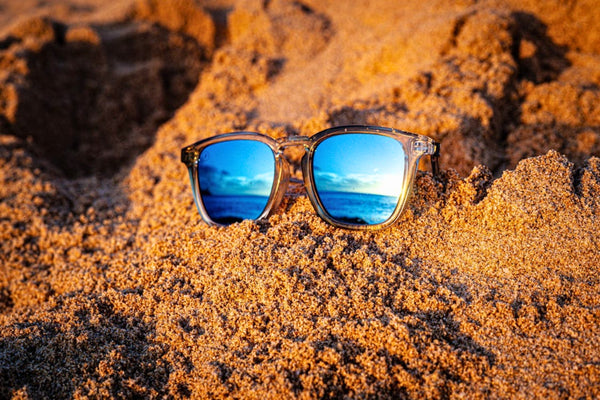
UV400 protection rating in sunglasses

Sunglasses are often chosen for how they look, but they play a much more important role in protecting your eyes. The right pair can help keep your vision comfortable in bright conditions while shielding your eyes from harmful ultraviolet (UV) rays.

Understanding what to look for, including terms like UV400 protection, can help you choose sunglasses t h a t not only suit your style, but also support your long‑term eye health.


What is UV light and how can it affect your eyes?

Sunlight contains ultraviolet (UV) rays, which are invisible but can have a lasting impact on your eyes. The two main types that reach us are UVA and UVB.

  • UVA rays are present all year round and can contribute to long-term eye conditions such as cataracts and macular degeneration.
  • UVB rays are more intense and can damage the surface of the eye.

While many people are aware of how UV affects the skin, fewer realise how sensitive the eyes are to UV exposure. Over time, repeated exposure without proper protection can increase the risk of eye health concerns.


Why UV protection in sunglasses matters

Sunglasses are not just about reducing brightness. A dark lens may feel more comfortable in the sun, but without proper UV protection, it may not be protecting your eyes at all.

In fact, darker lenses without UV protection can sometimes do more harm than good, as your pupils naturally widen in darker conditions, potentially allowing more harmful UV rays to enter the eye.

Choosing sunglasses with reliable UV protection ensures your eyes are properly shielded while you enjoy clearer, more comfortable vision outdoors.

For everyday comfort, this is often combined with lens options such as tinted lenses, photochromic or polarised lenses.

Learn the differences between tinted, polarised and photochromic lenses.


What does UV400 mean?

When you see UV400 protection on sunglasses, it means the lenses block 99–100% of harmful UVA and UVB rays. This is considered one of the highest levels of protection available.

UV400 refers to the wavelength of light that is blocked, covering the full range of ultraviolet radiation that can reach the eye.

Sunglasses with UV400 protection are a strong choice if you:

  • Spend time outdoors
  • Drive regularly
  • Are exposed to bright or reflective environments such as water or snow

If you are frequently outdoors, you may also benefit from polarised lenses which reduce glare in high-reflection environments.


How to choose sunglasses with the right protection

When choosing sunglasses, it is important to look beyond the style and check that they offer the level of protection your eyes need.

Look for sunglasses that:

  • Carry the CE mark
  • Or meet British Standard BS EN ISO 12312-1

These indicators prove that the sunglasses meet safety requirements for UV protection. If you are looking for a higher level of protection, choosing lenses with UV400 protection can offer additional reassurance.

It is also important to remember that lens colour or darkness does not determine UV protection.

How UV protection works alongside lens types

UV protection is just one part of choosing the right sunglasses. Different lens types can enhance comfort depending on how you use your vision:

  • Tinted lenses help reduce overall brightness and improve comfort in everyday environments
  • Polarised lenses reduce glare from reflective surfaces, making them ideal for driving
  • Photochromic lenses adapt automatically to changing light, offering convenience throughout the day

Explore our full guide to understand the difference between these lenses.


When should you wear sunglasses?

It is easy to think of sunglasses as something you only need on bright summer days, but UV rays are present throughout the year, even when it is cloudy.

Whenever you are outdoors during daylight, your eyes are exposed to UV. Levels tend to increase as the sun rises, peak when it is highest in the sky, and gradually reduce towards the evening, but exposure is still present throughout the day.

Wearing sunglasses regularly can help protect your eyes during outdoor activities such as:

  • Walking
  • Running
  • Cycling
  • Gardening
  • Playing sports
  • Driving
  • Spending time at the beach

In certain environments, such as near water or in snowy conditions, UV exposure can be even higher due to reflection. Snow, for example, can reflect up to 80% of UV light, increasing the amount that reaches your eyes.

If you experience discomfort in bright environments, you may also notice symptoms of light sensitivity (photophobia), where sunglasses and tinted lenses can help improve comfort.


Finding sunglasses that feel right for you

The best sunglasses are the ones that feel comfortable, suit your lifestyle, and provide the protection your eyes need.

At Leightons, we offer a carefully selected range of sunglasses, including both prescription and non-prescription options. Our team will guide you through lens choices, helping you find a pair that supports your vision while reflecting your personal style.

If you are unsure where to start, it can help to explore how to choose your sunglasses lenses.


Book your appointment

If you are unsure which sunglasses are right for you, or would like to ensure your eyes are fully protected from UV exposure, our team is here to help.

Book your style consultation today and find sunglasses that are tailored to your comfort, your vision and your lifestyle.

If you are due an eye test, book your test and we will ensure your sunglasses are perfectly matched to your new prescription, supporting your vision and your eye health.

You may also like

Migraine glasses: can tinted lenses help with headaches?
If you experience migraines or frequent headaches, you may have noticed that light can make symptoms feel worse. Bright environments, glare or certain patterns can trigger discomfort and make it harder to focus. Many people searching for migraine glasses in the UK are looking for ways to reduce these visual triggers. While glasses cannot treat migraines themselves, certain lenses, including carefully selected tinted lenses, can help improve visual comfort and reduce the impact of light. If you are exploring your options, it can also help to understand how tinted lenses for everyday comfort and clarity and everyday use.   Why light can trigger migraines and headaches For many people, migraines are closely linked to how the brain processes light. Bright or flickering light, glare from screens, or high-contrast environments can place extra strain on the visual system. This can lead to: Increased light sensitivity (photophobia) Eye strain and visual discomfort Difficulty focusing Headaches triggered or worsened by bright environments Some people may also experience visual stress, where patterns or contrast make text or surroundings feel uncomfortable or unstable.   What are migraine glasses? The term migraine glasses is often used to describe glasses designed to reduce light sensitivity and visual discomfort. In many cases, these involve tinted lenses that help soften brightness and reduce the intensity of certain light wavelengths. One commonly referenced option is FL-41 tinted lenses, which use a rose-based tint designed to filter specific parts of the light spectrum. Some people find this type of tint more comfortable, particularly in environments with artificial lighting or screen use. However, there is no single tint that works for everyone, and results can vary.   Do FL-41 lenses work for migraines? FL-41 lenses are often discussed in relation to migraines, and some people report improved comfort when using them. They are designed to reduce certain wavelengths of light that may be linked to visual discomfort. However, it is important to understand that: They do not prevent or treat migraines Their effectiveness varies between individuals They are one of several tinted options, not the only solution For many people, a personalised approach to tinted lenses can be more effective than choosing a single standard tint.   How tinted lenses can help Tinted lenses work by reducing overall brightness and improving how your eyes respond to light and contrast. For some people, this can help: Reduce visual discomfort in bright environments Soften glare from screens and artificial lighting Make reading or focusing feel easier Create a more relaxed visual experience If your symptoms are linked to light sensitivity or visual stress, you may also benefit from understanding the different types of tinted lenses and colours available, as some tones feel more comfortable than others.   Tinted lenses vs blue light glasses You may also come across blue light glasses when searching for migraine solutions. Blue light lenses are designed to filter a portion of light from digital screens and may help reduce glare for some people. However, there is currently limited evidence to show that they reduce migraines or prevent headaches. These lenses can enhance warmer tones, meaning a white background may appear slightly softer or more sepia in tone, similar to the setting often used on e-readers. Tinted lenses tend to offer a broader approach by reducing overall brightness and improving contrast, which may feel more beneficial if your symptoms are linked to light sensitivity rather than screen use alone. Compare blue light lenses vs tinted lenses to understand which is right for your needs.   Finding the right tint for you There is no one-size-fits-all solution when it comes to migraine glasses. The way your eyes respond to light is highly individual. Some people find relief with softer tones such as rose or grey, while others benefit from more specific colours tailored to their visual response. If visual stress is a contributing factor, a personalised assessment such as a colourimetry visual stress test can help identify which tint feels most comfortable for you.   Start with a full eye examination Before choosing tinted lenses or migraine glasses, it is important to understand what is causing your symptoms. A comprehensive eye examination allows us to assess your vision, check for underlying eye conditions, and understand how your eyes respond to light. From there, our qualified dispensing opticians can guide you towards the most appropriate options for your needs.   Takeaway Migraines and headaches can affect everyone differently, and the way your eyes respond to light is highly individual. While glasses cannot treat migraines, the right lenses can help reduce visual triggers such as brightness and glare, making everyday environments feel more comfortable. Tinted lenses, including options similar to FL-41, may help some people by softening light and improving visual comfort, particularly where light sensitivity or visual stress is a factor. However, there is no single solution that works for everyone, which is why a personalised approach is so important. At Leightons, we take the time to understand your symptoms, your lifestyle and how your eyes respond to light. Starting with a comprehensive eye examination by one of our optometrists, our qualified dispensing opticians can advise on the correct lens solution or you, whether that involves tailored tinted lenses or further assessment such as colourimetry. Book an appointment Find your nearest branch
Navigation Previous
Navigation Next